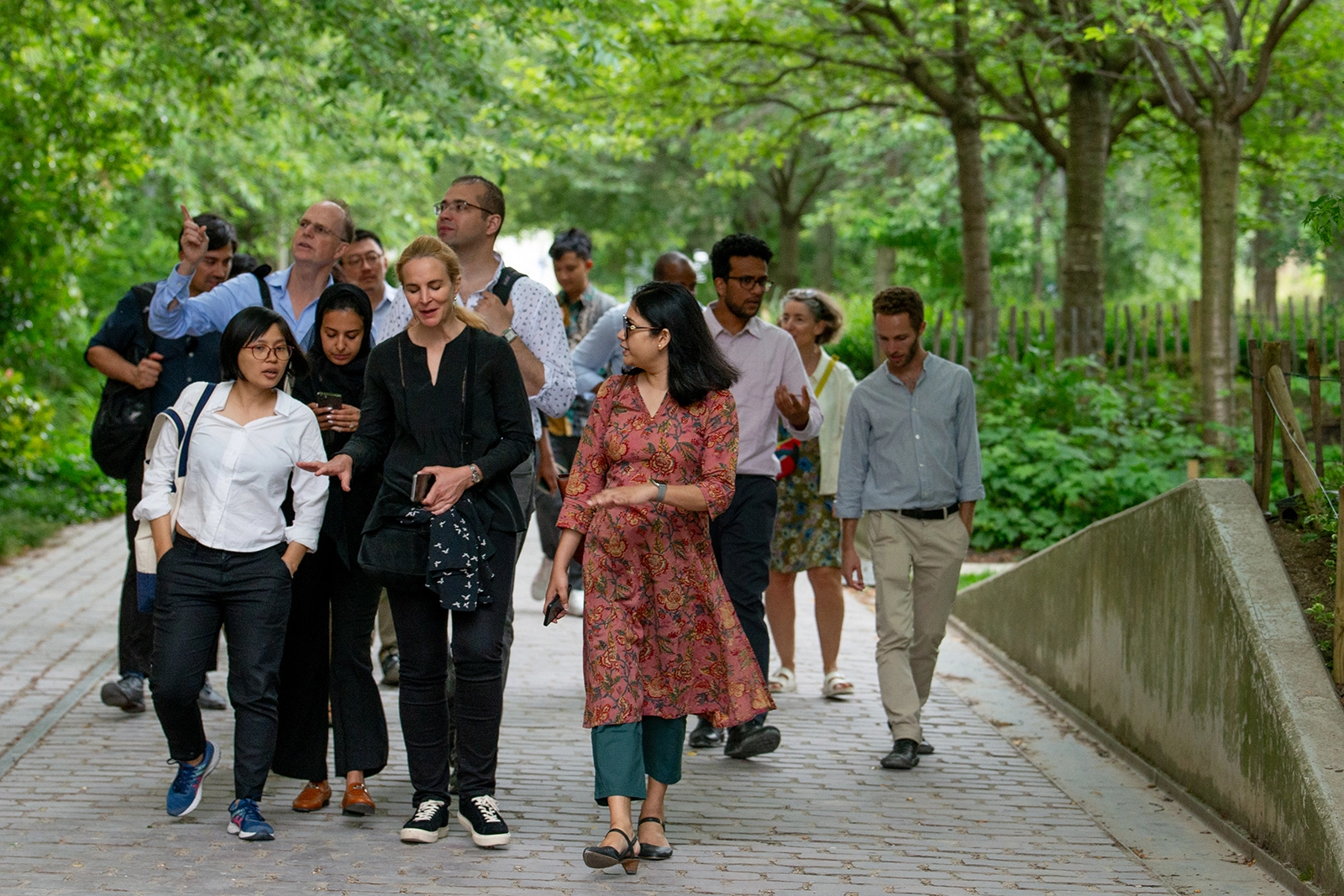
Yale Emerging Climate Leaders Fellowship 2027: Fully Funded Program in the US and France
There is a specific kind of professional frustration that is common among mid-career climate practitioners in the Global South: you've built something real, you understand the local problem better than anyone advising from outside, and yet the rooms where global climate policy actually gets shaped keep filling with the same faces from the same institutions in the same cities. The Yale Emerging Climate Leaders Fellowship exists, in part, to change that dynamic and the way it does so is more structured and substantive than most "youth in climate" programs you will encounter.
This is not a conference invitation. It is not an essay competition. It is a five-month, three-part professional fellowship built around the Yale Jackson School of Global Affairs, with in-person sessions at Yale University in New Haven, Connecticut, and at the headquarters of the International Energy Agency and the OECD in Paris, France fully funded, no application fee, and no cost to accepted fellows at any stage.
Here is everything you need to know about the program, what the 2026 cohort looked like, and how to position yourself for the 2027 cycle.
What the Yale Emerging Climate Leaders Fellowship Actually Is
The Yale Emerging Climate Leaders Fellowship offers an opportunity for 16 young climate and clean energy practitioners from across the Global South to broaden their technical skills, deepen their professional networks, and exchange views with top global clean energy and climate change leaders.
The program is housed within the Yale Jackson School of Global Affairs' International Leadership Center, and its program leadership is unusually senior for a fellowship of this kind. The program is overseen by Paul Simons, a Jackson Senior Fellow and retired US ambassador who has been actively engaged in global energy and climate change policymaking for more than two decades. From 2015 to 2020, he served as Deputy Executive Director and Chief Operating Officer of the International Energy Agency, the leading global authority for energy and climate change analysis and policy development, where he led outreach activities with emerging economies and G-20 coordination.
That background matters because it shapes who the program calls on as speakers, partners, and mentors. When the program says fellows will network with staff from the IEA, that's not an aspirational bullet point, it's a direct institutional relationship built over years of the program director's own career.
The fellowship is anchored by a group of seasoned professionals from the Jackson School's International Leadership Center. Director Emma Sky and her ILC team provide essential policy and administrative support for the Yale Emerging Climate Leaders Fellowship.
You May Also Like :
Danish Government Scholarships
WIC Global Youth Leaders Program 2026: Fully Funded Trip to China for Digital Leaders
The Three-Part Program Structure
The architecture of this fellowship is what makes it genuinely different from a one-week summit or a standalone training program. The five-month hybrid program includes two week-long in-person sessions at Yale and in Paris, bridged by bi-monthly remote Learning Journeys.
Part One: Yale Orientation Week
This five-month fellowship begins with a one-week, in-person orientation program at Yale University in New Haven, Connecticut. Fellows will engage in a series of interactive sessions with prominent Yale faculty and practitioners to set the terms of the global climate change debate. Fellows will explore the wide range of climate change initiatives housed at Yale and delve into cutting-edge scholarship on a broad range of clean energy and climate issues.
The institutions you engage with during this week are not generic university departments; they include some of the most respected research centers working on the policy-to-practice gap in climate. Among the centers and institutions which may be featured in the orientation program are the Yale Program on Climate Change Communication, the Yale Center for Natural Carbon Capture, the Yale Open Lab, the Yale Center for Business and the Environment, the Yale Center for Environmental Law and Policy, and the Yale Office of Sustainability, which manages the University's net zero goal.
For the 2026 cohort, this week ran February 9–13, 2026. The 2027 cycle can be expected to follow a similar February timing based on the program's established annual pattern.
Part Two: Remote Learning Journeys
Between the two in-person weeks, the fellowship doesn't go quiet. From March through June 2026, Climate Fellows organized and carried out a series of interactive remote sessions with top international experts on the full range of policy issues associated with climate change and the clean energy transition. Sessions are spirited journeys allowing for development of communities of practice in specialties and extensive mentoring opportunities.
The range of topics covered in these sessions is genuinely comprehensive. Possible topics include strengthening global climate change governance including the UN process, exploring decarbonization pathways including the IEA Net Zero 2050 scenario, accelerating renewable electricity growth and addressing challenges of system integration, strengthening innovation and uptake of promising clean energy technologies, promoting energy efficiency and behavioral change, investigating the challenges of a people-centered clean energy transition, developing and deepening financial vehicles to advance the clean energy transition, exploring market-based climate policy tools including carbon pricing, improving climate change communication, closing energy access gaps with clean energy technologies, developing cost effective negative emissions technologies including direct air capture, exploring the role of nature-based climate solutions, broadening and deepening corporate and investor initiatives on climate change, tackling energy security issues including the role of fossil fuels in the energy transition, and analyzing challenges of reducing methane emissions in emerging and developing countries.
This is not a general survey. It's a curriculum that maps directly to the actual negotiating table at COP and the policy documents coming out of the IEA which is exactly what makes it useful for someone already working in the field rather than just learning about it for the first time.
Part Three: Paris Closing Week
The fellowship concludes with an in-person week in Paris, from June 15–19, 2026. Fellows will meet with top international climate change analysts, share perspectives gleaned throughout the program, and consolidate professional and personal contacts developed through peer learning and exchanges of views.
The Paris week is where the institutional network becomes most tangible. Fellows will have networking opportunities with staff members from the International Energy Agency and the Organization of Economic Cooperation and Development, French central government and municipal officials, and representatives of civil society organizations, think tanks, academia, and the private sector.
The closing week is also where fellows move from receiving expertise to contributing it. Fellows will also present policy recommendations on specific clean energy and climate-related challenges to a global advisory board, publish those findings, and maintain contacts through an alumni network.
That published policy output is worth noting explicitly. Most fellowships give you a certificate at the end. Yale Emerging Climate Leaders gives you a published document that goes out to an advisory board of senior climate professionals, something that carries real weight in the climate policy community.
What the Fellowship Costs You: Nothing
There is no application fee or other cost to apply or participate. All fellows' costs for Yale Orientation week and Paris closing week will be covered by the program round-trip airfare, hotels, transfers, and per diem.
This is worth being explicit about because the program doesn't headline this information prominently on the main landing page, and many prospective applicants assume there must be some cost involved when they see Yale's name attached. There isn't. Round-trip international flights to New Haven and Paris, hotel accommodation for both weeks, airport transfers, and daily per diem are all fully covered for selected fellows.
The remote Learning Journeys happen online, so no additional travel is involved for those sessions.
Who Gets Selected: The Real Profile of a Climate Fellow
Climate Fellows are drawn from a wide variety of professions, ranging from public servants to entrepreneurs, energy company professionals, financiers, journalists, educators, researchers, civil society representatives, legal advisers, and legislators.
The 2026 cohort makes the breadth of that description concrete. The 2026 cohort includes a Fijian climate negotiator advancing adaptation for vulnerable island states, a Namibian practitioner working with parliaments to shape ambitious climate legislation, and a Filipino entrepreneur pioneering new battery technologies to support the energy transition.
Looking at the full 2026 fellows list, the professional range is striking: Trishna Nagrani leads the Asian expansion for Climeworks, the world's leading direct air capture company. Tashmeem Muntazir Chowdhury heads Sustainable Finance at what appears to be a major financial institution in Bangladesh. Joey Ocon is a scientist, educator, and entrepreneur working on battery technologies in the Philippines. Rachel Mundilo works at the intersection of climate action and parliamentary governance in Namibia. Andhyta Firselly Utami is a climate policy entrepreneur from Indonesia. Lolade Awogbade brings over 16 years of sustainability practice. Anish Malpani is building Without®, a Pune-based social enterprise working on waste and emissions.
This is the profile of the selection committee's priorities: people who are already doing serious, consequential work in their field, not people who hope to do it someday. That distinction matters enormously when you're thinking about how to frame your application.
Eligibility: Who Can Apply
The eligibility criteria for this program are specific, and worth reading carefully before investing time in an application.
Career stage: Applicants should be between five and ten years into their professional careers, with demonstrated accomplishments at a regional, national, or international level. While there is no minimum or maximum age requirement, the program is looking for leaders who are still on the rise in their careers.
Five to ten years is the sweet spot the program is targeting. If you are two years out of university, you are likely too early even with strong accomplishments. If you are thirty years into a career, the program's framing of you as an "emerging" leader becomes a stretch. The program explicitly states it wants people with a track record who still have a significant career ahead of them.
Geography: Applicants must be representatives of the Global South. The program looks forward to welcoming a diverse representation from developing Africa, Asia, the Middle East, and Latin America and the Caribbean.
This is not a program open to applicants from North America, Western Europe, or other high-income countries. It is intentionally and specifically designed for practitioners from emerging and developing economies and the geographic balance of each cohort is actively managed to ensure representation across regions.
Language: Applicants must be fluent in English. An excellent command of the English language is essential to successfully participating in the program.
Availability: Climate Fellows must be available to fully participate in all parts of the program, including in-person for two weeks of the program, the Yale Orientation week and the Paris closing week. Fellows must also be available to participate in the five remote learning journeys and to work on a collaborative group project between March and June.
This last point is one where applicants sometimes underestimate what "available" means. The remote learning journeys are not optional enrichment; they are a core component of the program. If your professional situation makes it difficult to commit five months of regular engagement including two international travel weeks, it's worth thinking carefully before applying, since incomplete participation affects the entire cohort experience.
Selection Criteria: What the Committee Is Actually Evaluating
There are four things the selection committee is looking for, and understanding how they differ from each other helps you calibrate what your application needs to demonstrate.
First, an established record of achievement in a profession linked to clean energy and climate change. The program seeks to identify a diverse group of fellows from across multiple stakeholder groups, ranging from government officials, to entrepreneurs, energy company and utility professionals, bankers and financiers, journalists, educators and researchers, civil society representatives, legal advisors, and legislators.
Second, a commitment to making a positive impact at the local, national, or international level. Third, demonstrated promise of a future career in leadership at both the national and potentially global level. Fourth, an eagerness to expand and deepen professional networks and to benefit from exposure to top global leaders in the clean energy and climate change space.
Notice the balance here: the first criterion is about what you've already done, and the third is about where your career is going. Both matter. A strong past without a clear forward trajectory will not be as competitive as someone whose track record points toward increasing national or international influence.
The fourth criterion eagerness to network might sound soft, but it's actually evaluating something specific: whether you are the kind of professional who will show up at the IEA lunch in Paris and have a real conversation rather than collecting business cards. The program is investing in fellows who will remain connected to the alumni network and to each other because that sustained network is part of what makes the program's broader mission work.
What You Need to Apply
The application process for admission to the Climate Fellows Program is done entirely online. There are no paper forms to complete or mail. There is no application fee or other cost to apply or participate.
Applicants are required to submit a résumé or curriculum vitae of maximum three pages, a brief video statement, a personal statement of maximum 600 words, and one letter of recommendation.
Each of these components deserves more thought than most guides give them.
The résumé (three pages maximum): Three pages is generous for most fellowship applications, which typically cap at one or two. Use the space. Climate is a field where the specifics of your work matter, the policy you shaped, the gigawatt-hours of renewable energy you helped finance, the number of households in your clean cooking program. Vague descriptions of "contributing to sustainable development" waste the committee's time. Concrete outcomes don't.
The video statement: This is the component where most applicants underinvest. A video statement is not a transcript of your personal statement read aloud it's an opportunity to demonstrate the communication skills the program cares about, since so much of the fellowship involves presenting to senior figures and participating in live discussions. Speak naturally, not from a script. Be specific about your work in the first thirty seconds. Don't fill time with general statements about why climate matters.
The personal statement (600 words maximum): Six hundred words is not much. Every sentence needs to earn its place. The most common mistake is spending too many words on background and not enough on what specifically makes your work, your perspective, and your career trajectory a good fit for a cohort of 16 people who will be learning from each other as much as from the faculty. The program is geographically diverse and makes clear what regional or professional perspective you bring that the room would be missing without you.
The letter of recommendation: One letter. Choose someone who has seen your work directly and can speak to the specific quality of your judgment and impact not the most senior person you know who will write a generic endorsement. A letter from a direct supervisor who can describe a specific decision you made under pressure is more useful than a letter from a minister who met you twice.
Where the 2026 Application Cycle Currently Stands
The application period for the 2026 Yale Emerging Climate Leaders Fellowship has passed and the application portal is closed.
The 2026 cohort is already selected and underway the February orientation week at Yale has concluded, and fellows are currently in the remote learning journey phase, with the Paris closing week scheduled for June 15–19, 2026.
The 2027 cycle application window has not yet opened. Based on the program's established annual pattern, applications for the 2027 cohort can be expected to open in the second half of 2026, with an orientation week at Yale in early 2027 and a Paris closing week in June 2027. The application portal for future cycles is at: apply.worldfellows.yale.edu
You may Also Like : Anthropic Claude Corps Fellowship 2026 — USA
Why This Fellowship Is Worth the Application Effort
The honest case for applying to the Yale Emerging Climate Leaders Fellowship is not about the prestige of Yale's name, though that's real. It is about what happens structurally during the five months and afterward.
The IEA and OECD relationships are not decorative. The IEA Net Zero by 2050 scenario is the primary analytical framework for global decarbonization and meeting the staff who build and defend it, in their own offices, while presenting your own policy recommendations to a senior advisory board, is a qualitatively different experience from reading the reports.
The cohort model matters too. Sixteen fellows, geographically diverse, professionally diverse, selected for both track record and trajectory this is a network that will matter in ten years in ways that are hard to predict but easy to imagine. Climate negotiations, green finance mechanisms, national energy transitions, adaptation programs for vulnerable states these are arenas where the people in a 2027 Yale cohort will be increasingly influential. Building those relationships now, in an intensive five-month shared experience, is worth more than most credentials.
And the published policy output is genuinely useful. Having a document you contributed to reviewed by a senior global advisory board and published through a Yale program is a legitimate addition to a professional portfolio in climate policy. It's not a certificate of participation. It's something you made.
How to Apply for the 2027 Cohort
Applications for the 2027 cycle are expected to open later in 2026. When they do, they will be submitted through the program's online portal no paper forms, no application fee.
Prepare the following now, before the portal opens:
A résumé that leads with specific professional outcomes in clean energy or climate, not job titles. A clear narrative of what you have accomplished, what it changed, and what you are working toward because that narrative forms the backbone of both your personal statement and your video. A recommendation relationship with someone who can speak to the specific quality of your work in a high-stakes situation. And an honest read of your availability: two international travel weeks and five months of regular program engagement require genuine scheduling flexibility.
- Official program page: jackson.yale.edu/international-leadership-center/climate
- Application portal (2027 cycle, when open): apply.worldfellows.yale.edu
- Contact: jackson.yale.edu/international-leadership-center/climate/contact
Ready to Apply?
Gather your documents and apply through the official website.
Apply on Official WebsiteNo application fee required through our portal.