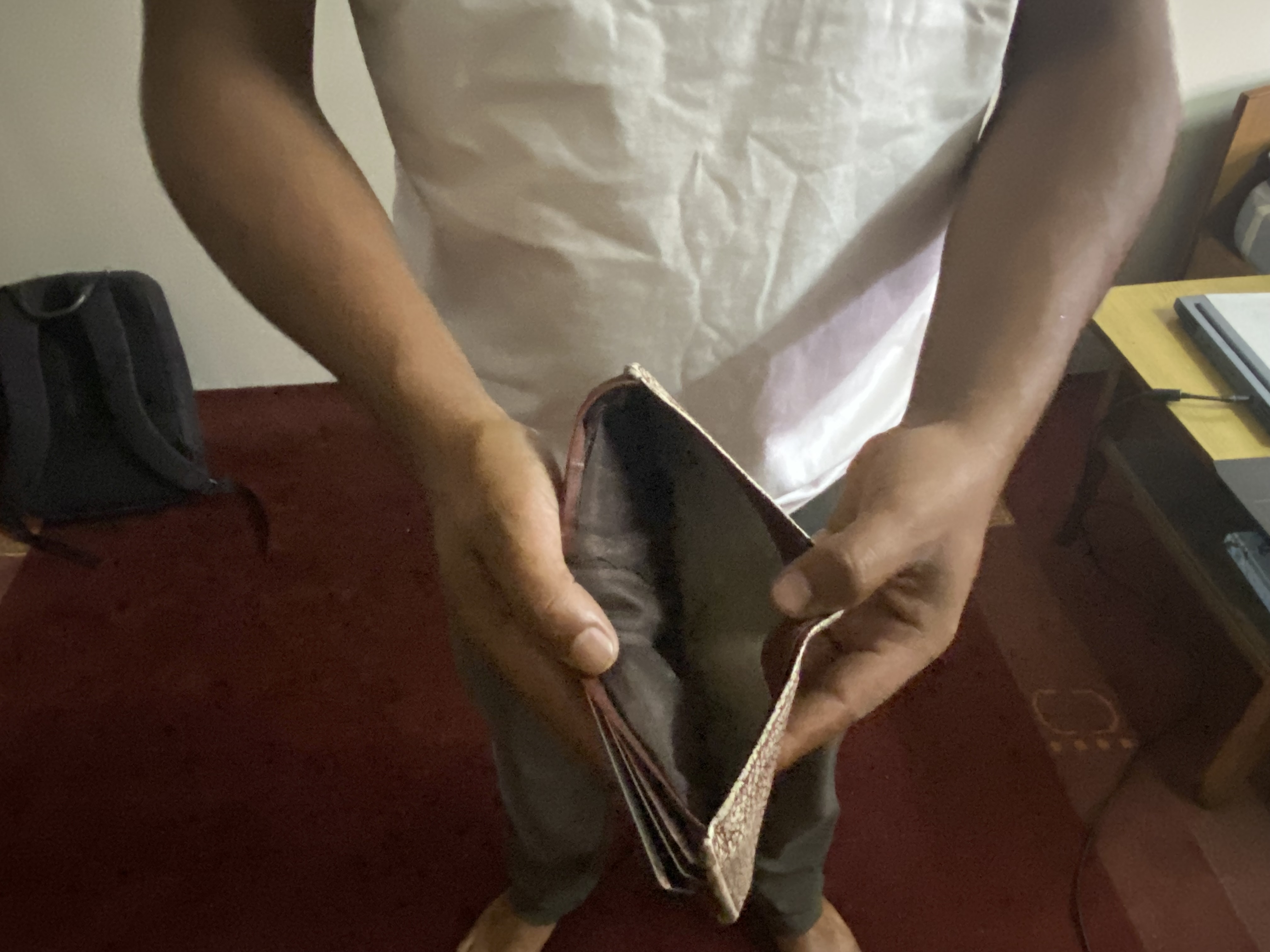
You're not alone if student loan debt keeps you awake at night. The average undergraduate borrower graduates with over $20,000 in student loans, while graduate students face an average of $42,000 in debt. For millions of Americans, student loans have become the single biggest obstacle to building wealth, buying a home, starting a business, or achieving financial independence.
But here's the question that matters: Is your student debt inevitable, or is it a trap you can escape?
The answer might surprise you. While student loans are presented as a necessary pathway to education, the reality is far more complex. Understanding the true nature of student debt and the options available to you is the first step toward actual freedom.
In this guide, we'll explore practical strategies to escape student loan debt, and we'll examine why understanding the predatory mechanisms behind this $85-billion industry is crucial to your financial recovery.
Section 1: The Reality of Student Debt in America
Why Student Loans Are Different (And Worse)
Student loans represent something unique in American consumer finance: debt stripped of the protections that apply to mortgages, car loans, and credit cards.
Since the mid-1990s, federal legislation has systematically removed standard consumer protections from student loans. This has created a debt system with:
- Limited bankruptcy options - Unlike other debts, student loans are nearly impossible to discharge in bankruptcy
- Wage garnishment powers - Lenders can garnish your wages without a court order
- Offset of tax refunds - The government can take your entire tax refund
- Social Security garnishment - Even retirement income isn't safe
- Collection fees - Up to 16% added to your debt for collection costs
- Interest accrual on deferred loans - You can owe more than you borrowed
When you combine these enforcement mechanisms with the rapid inflation of tuition costs which have increased at more than double the rate of inflation over the past two decades you get a perfect storm: younger generations trapped by debt they can't escape.
The Numbers That Matter
- Average undergraduate debt: $20,000+
- Average graduate student debt: $42,000
- Total student loan debt: $1.7+ trillion
- Percentage of millennials delaying major life events due to student debt: 36%
- Average student loan repayment timeline: 10-25 years
These aren't just statistics. They represent delayed marriages, postponed home purchases, skipped entrepreneurial ventures, and diminished retirement savings.
Section 2: Immediate Strategies to Reduce Your Student Loan Burden
Strategy 1: Understand Your Loan Types
Your first step is knowing what you're dealing with. Student loans fall into three categories:
Federal Loans (66% of all student debt)
- Direct Subsidized Loans (interest doesn't accrue while in school)
- Direct Unsubsidized Loans (interest accrues immediately)
- PLUS Loans (for parents and graduate students)
- Perkins Loans (older loans with some forgiveness options)
Private Loans (34% of all student debt)
- Issued by banks and lenders
- Far fewer consumer protections
- No forgiveness programs
- Cannot be rehabilitated
Private loans are particularly predatory. Unlike federal loans, they offer no income-driven repayment options, no forgiveness programs, and no deferment or forbearance protections.
Action Item: Log into your student loan servicer account and document:
- Loan type (federal vs. private)
- Interest rate on each loan
- Current balance
- Servicer contact information
- Current repayment plan
Strategy 2: Switch to Income-Driven Repayment (IDR) Plans
If you have federal student loans, the most underutilized tool available to you is income-driven repayment.
Federal IDR plans include:
Plan | Monthly Payment | Loan Forgiveness Timeline |
PAYE (Pay As You Earn) | 10% of discretionary income | 20 years |
REPAYE (Revised PAYE) | 10% of discretionary income | 20-25 years |
IBR (Income-Based Repayment) | 10-15% of discretionary income | 20-25 years |
ICR (Income-Contingent Repayment) | 20% of discretionary income | 25 years |
Why this matters: If your income is low relative to your debt, your monthly payment could drop from $400-500 to $50-100 or even $0. Meanwhile, your loan balance doesn't grow you're actually making progress.
Critical caveat: After 20-25 years, any remaining balance is forgiven, but you'll owe taxes on the forgiven amount (potentially thousands). This is a major issue rarely discussed.
Action Item: Apply for income-driven repayment at studentaid.gov. This could reduce your monthly payment immediately.
Strategy 3: The Aggressive Payoff Method
If your income allows it, there's a simple mathematical truth: attacking your highest-interest loans first saves you the most money.
The Debt Avalanche Method:
- List all loans highest interest rate to lowest
- Pay minimums on all loans
- Put every extra dollar toward the highest-rate loan
- Once that loan is gone, move to the next
- Repeat until debt-free
Example:
- Loan A: $15,000 at 6.8% interest
- Loan B: $25,000 at 5.2% interest
- Loan C: $12,000 at 3.8% interest
You'd pay minimums on B and C, but put all extra funds toward Loan A. Once Loan A is eliminated, you redirect that payment amount to Loan B.
This method works because interest compounds. A $5,000 extra payment on a 6.8% loan saves you $3,400 in interest over the life of that loan but the same $5,000 payment on a 3.8% loan only saves $900 in interest.
Action Item: Calculate your total interest paid if you only make minimum payments. Then calculate how much you'd save with the debt avalanche method. The difference is often $10,000-30,000+.
Section 3: Advanced Escape Strategies
Public Service Loan Forgiveness (PSLF)
If you work for a government agency or qualifying non-profit, Public Service Loan Forgiveness is genuinely valuable.
How it works:
- Make 120 qualifying monthly payments (10 years)
- Work full-time for a qualifying employer
- Remaining balance is forgiven tax-free
- No income limits
The catch: You must be on an income-driven repayment plan, and the original guidelines were extremely strict about what counted as a "qualifying payment." The recent PSLF waiver (2021-2023) allowed millions to correct past payment counts.
Action Item: If you work in public service, verify your employment qualifications at studentaid.gov. Get this in writing from your employer.
Loan Consolidation and Refinancing
Federal Consolidation: Combining multiple federal loans into one Direct Consolidation Loan can simplify payments, but watch for interest rate averaging (which usually increases your rate).
Private Refinancing: Private lenders offer refinancing at competitive rates but only for borrowers with good income and credit. Refinancing federal loans into private loans eliminates all federal protections and forgiveness options.
When it makes sense: Refinancing to a private loan only makes sense if:
- Your interest rate drops by 1%+
- You have a stable, high income
- You have a clear, fast payoff timeline (3-5 years)
- You're willing to lose all federal protections
Section 4: Understanding the Predatory System (And Why This Matters)
Here's what most student loan advice misses: individual strategies matter, but they're like using a bucket to bail out water from a leaking boat. You can do everything "right" and still feel stuck because the system itself is designed to extract wealth.
The Architecture of Predation
Federal legislation since the mid-1990s has created a student loan system where:
- Risk is one-sided - You bear all risk of income changes, health issues, or job loss. Lenders bear none.
- Penalties are draconian - A single missed payment can trigger 16% collection fees, wage garnishment, and credit destruction.
- Escape is nearly impossible - Unlike every other form of consumer debt, bankruptcy provides almost no relief from student loans.
- Terms keep worsening - As an example, tuition increases have far outpaced inflation, creating an impossible mathematics where younger generations take on proportionally larger debts.
- Conflicts of interest shape policy - Student loan servicers profit from defaults and delinquencies, creating perverse incentives against borrower success.
This isn't accidental it's the result of deliberate legislative choices that have transformed student loans into a wealth-extraction machine targeting young Americans.
Why Understanding This Matters
Many borrowers try to escape student debt by working harder, earning more, or cutting expenses. These strategies help, but they miss the fundamental point: no amount of individual effort changes a system designed to extract maximum wealth.
Understanding how student loans actually work and why they work differently from other debt is your path to making informed decisions about:
- Whether to refinance or stick with federal loans
- Which repayment strategy actually fits your life
- Whether advanced degrees are worth the debt
- How to negotiate with your lender from a position of knowledge
Section 5: The Comprehensive Resource You Need
If you're serious about understanding student debt deeply enough to truly escape it, you need more than scattered advice. You need a comprehensive analysis of how the system works, your options within that system, and strategic decisions about your specific situation.
"The Student Loan Scam: The Most Oppressive Debt in American History" by Alan Collinge is precisely this resource.

Collinge's work isn't abstract theory it's a detailed exposé that examines:
- How federal legislation created the perfect predatory system - Understanding which laws matter and why they were passed
- The enforcement mechanisms designed to trap you - Wage garnishment, tax offset, Social Security garnishment, and collection fees
- Why bankruptcy offers virtually no relief - The legal framework that makes student loans nearly impossible to discharge
- Real strategies used by successful borrowers - Actual paths people have taken to achieve relief
- The political and financial interests keeping the system in place - Who benefits from maintaining high student debt and why reform is difficult
This book fills a gap in most student loan advice: connecting individual strategies to systemic understanding. You can pay off loans faster (good), but you should also understand why the system made those loans so large in the first place.
Why This Matters For Your Situation
Whether you're:
- A recent graduate considering income-driven repayment
- A parent evaluating graduate school costs
- Someone struggling with private loans
- A borrower considering refinancing
- An advocate working for systemic policy reform