The international education landscape has shifted dramatically. For over a decade, the playbook for ambitious students across the globe was simple: secure admission in the United States, the United Kingdom, or Canada, figure out the financing somehow, and use the post-study work visa to build a life.
In 2026, that old playbook is officially broken.
A wave of aggressive policy tightening across the traditional "Big Three" has created massive barriers for international applicants. Canada has abolished the popular Student Direct Stream (SDS) and enforced strict provincial study permit caps while raising the living expense proof to an intimidating $22,895 CAD. The UK has banned most taught postgraduate students from bringing dependents and hiked visa and healthcare levies significantly. Meanwhile, the US has drastically increased financial vetting and shifted its H-1B lottery focus heavily toward high-wage selection, leaving mid-level graduates in a state of constant uncertainty.
If you feel stuck, frustrated, or priced out, here is the good news: the world is much bigger than three countries. Exceptional, ambitious students are pivoting to new destinations that actively want global talent, offer fully funded Master's scholarships, and provide clear, merit-based pathways to Permanent Residency (PR).
Here is your comprehensive guide to the top alternative countries to target this year.
📊 2026 Study Abroad Reality Check: The Big Three vs. The New Frontiers
| Destination Country | Financial Proof Required (Living Costs) | Dependent Visa Rights (Master's) | Post-Study Work / PR Pathway Status |
|---|---|---|---|
| United Kingdom | High (£1,171–£1,529 / month) | ✗ Strictly Banned (Except PhD/Research) | 18–24 month Graduate Visa; high salary thresholds for permanent settlement. |
| Canada | Very High ($22,895 CAD / year) | ✗ Highly Restricted | SDS cancelled; strict caps on study permits; PGWP restricted to specific labor-market fields. |
| United States | Extreme (Tuition + Heavy Scrutiny) | ✓ Allowed (F-2, no work rights) | OPT/STEM OPT intact, but long-term H-1B and Green Card processing faces deep backlogs. |
| Germany | Moderate (Blocked Account / Waived if Funded) | ✓ Allowed (Under family reunion) | Tuition-free public universities. 18-month post-study visa; fast-track PR for local grads within 2 years. |
| France | Moderate (~€615 / month) | ✓ Allowed | 1-2 year post-study visa; highly accelerated naturalization/PR for French Master’s holders. |
| Ireland | Moderate (€10,000 / year proof) | ✗ Restricted | 24-month automatic post-study work visa; booming tech/biotech hub with direct critical skills pathways. |
🇩🇪 1. Germany: The Unrivaled King of High-ROI Education
Germany remains the most robust alternative for international graduate students. While other nations treat international education as an export industry to generate revenue, Germany views international students as the solution to their skilled labor shortage.
The Funding: DAAD Scholarships & Beyond
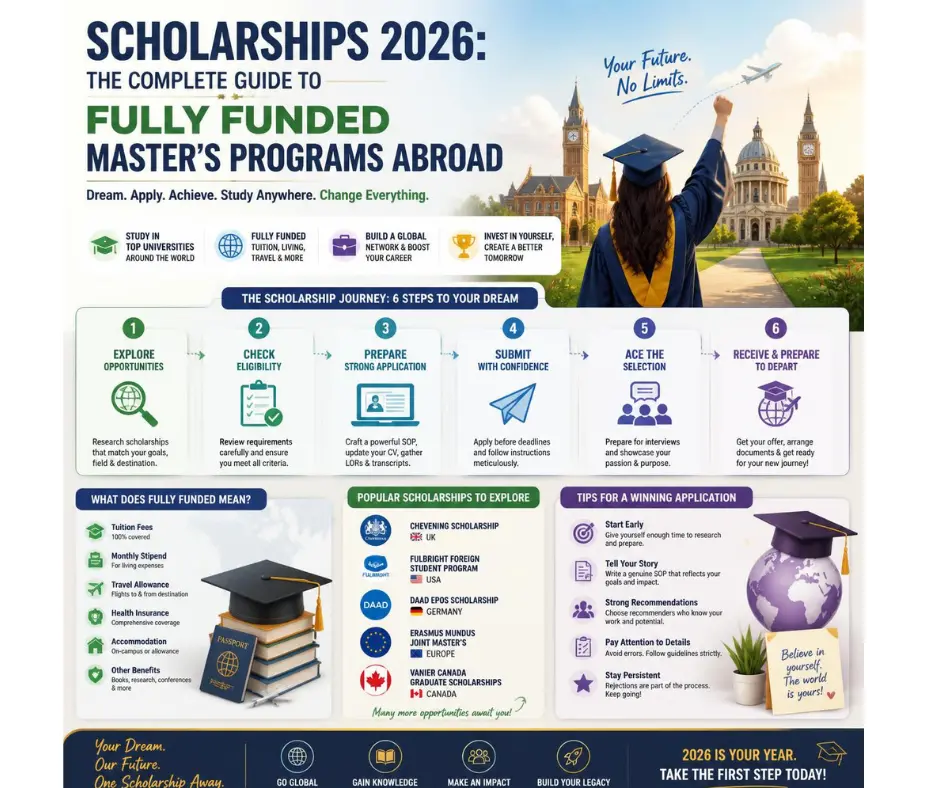
Public universities in Germany charge zero tuition fees for both local and international students, regardless of nationality. Your only core cost is living expenses. However, if you want your living costs fully covered as well, the German Academic Exchange Service (DAAD) offers premier funding tracks.
- The DAAD EPOS Program: Designed for professionals and academics from developing nations. It provides a monthly stipend of €992 for Master’s students, covers travel allowances, provides health insurance, and includes an annual study allowance.
- The Deutschlandstipendium: A public-private partnership open to all nationalities at participating universities, providing an extra €300/month based purely on academic merit, completely independent of personal or parental income.
The PR Pathway
Germany’s immigration system is incredibly friendly to its local graduates. After completing your Master’s degree, you receive an automatic 18-month job-seeker visa. Because you hold a German university degree, you can transition to a permanent residence permit (PR) after working for just 24 months in a field related to your qualifications, provided you maintain basic German language proficiency.
🇫🇷 2. France: The Fast-Track to European Integration
France has quietly positioned itself as an elite alternative to the UK, aggressively expanding its English-taught Master's portfolios in data science, business, engineering, and climate technology.
The Funding: Eiffel Excellence Scholarship
Managed by the Ministry for Europe and Foreign Affairs, the Eiffel Excellence Scholarship is a highly prestigious, fully funded track for international Master's applicants.
- What it Covers: A monthly allowance of €1,181, round-trip international airfare, health insurance, and cultural activities. While it does not cover tuition fees directly, most top-tier French public universities have nominal tuition rates or waive them entirely for Eiffel scholars.
The PR Pathway
France offers one of the fastest naturalization or residency fast-tracks in the western world for highly educated expats. If you successfully complete a two-year Master’s degree at a recognized French higher education institution, the standard residency requirement for citizenship/PR eligibility is slashed from five years down to just two years. Combined with a multi-year post-study work authorization (Recevabilité d'un diplôme durable), France offers a concrete, stress-free route to long-term settlement.
🇮🇪 3. Ireland: The Silicon Valley of Europe
For students who strictly want an English-speaking environment without the intense visa hurdles currently found in the UK or Canada, Ireland is the premier alternative choice in 2026.
The Funding: Government of Ireland International Education Scholarships
The Irish government offers a dedicated scholarship program open to high-achieving non-EU/EEA students.
- What it Covers: A full tuition fee waiver at your chosen Irish university plus a €10,000 stipend to cover your localized living costs for one full year of Master’s study.
The PR Pathway
Ireland utilizes a highly efficient Third Level Graduate Scheme (Stamp 1G), which grants Master’s graduates an automatic, un-sponsored 24-month post-study work visa. Because Dublin serves as the European headquarters for tech and pharma giants like Google, Meta, Apple, Pfizer, and Stripe, graduates who land a job in a sector on the official Critical Skills Shortages List are placed on a direct, fast-track path to permanent settlement within two years, completely bypassing standard labor market needs tests.
🎯 Your 2026 Strategy Roadmap: How to Pivot and Win
Because alternative European and Asian destinations do not rely heavily on massive tuition fees to survive, they prioritize academic excellence, clear intent, and skill alignment over financial capacity. To stand out to admission panels and scholarship boards this year, follow this precise execution timeline:
1
Shift From Finances to Alignment
Months 1–2
1.Shift From Finances to Alignment:Months 1–2.
Review the critical skill shortage lists of your target country (e.g., Germany's or Ireland's labor shortage indices). Align your personal statement and research proposals directly with these national economic needs.
2
Secure Academic Recommendations
Month 3
2.Secure Academic Recommendations:Month 3.
Programs like the DAAD require highly specific, institutional recommendation forms. Approach your undergraduate professors early and ensure they can comment explicitly on your analytical capacities and resilience.
3
Standardize Your Documentation
Month 4
3.Standardize Your Documentation:Month 4.
Format your CV using internationally accepted frameworks (such as the Europass format for European institutions). Ensure every single transcript and certificate is officially translated, notarized, and matches your passport name down to the exact punctuation.
4
Apply Directly to the Funding Portals
Months 5–6
4.Apply Directly to the Funding Portals:Months 5–6.
Do not wait for standard university deadlines. National scholarship deadlines (like Eiffel or DAAD) often close up to a year before the actual intake semester begins. Submit your centralized funding applications directly through the official national government portals.
The 2026 Takeaway: Don't let the tightening borders of the US, UK, or Canada stall your global career. By shifting your focus to countries that value academic potential over financial liquidity, you can secure a world-class, fully funded education without the compounding stress of an unstable immigration landscape.
If you are preparing applications for these specific European frameworks, check out this guide on How to Win a DAAD Scholarship which outlines the exact interview expectations, financial documentation, and strategic pitfalls to avoid under the updated 2026 international regulations.